Introduction | The Year Advertising Became “News”
In 2025, something strange happened in the world of advertising. Not a single one of the most talked-about campaigns looked like “advertising” in any traditional sense. A language-learning app “killed” its own mascot. A luxury conglomerate became a co-creator of the Olympics. A United Nations project debuted “Nature” as an official artist on Spotify.
None of these were TV commercials or banner ads. Yet each generated hundreds of millions to billions of impressions, was picked up by news media, and went explosively viral on social platforms. They shared one thing in common: precisely because they were not received as advertising, they wielded a power greater than advertising.
In this first installment of our series “Learning from Global Advertising and Marketing,” we dissect three cases that moved the world in 2025 and explore the conditions under which advertising ascends to the level of an “incident.”
Case 1 | Duolingo’s “Death of the Mascot” — The Explosive Power of Narrative
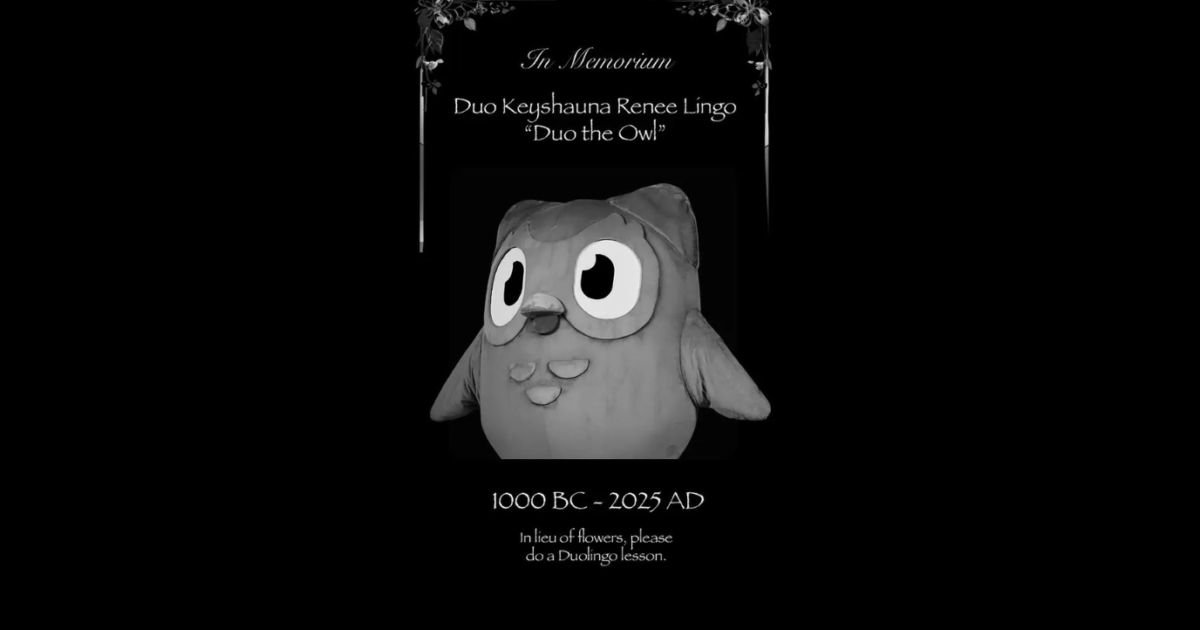
On February 11, 2025, language-learning app Duolingo dropped a bombshell on social media: its official green owl mascot “Duo” had died. The app icon turned gray, and the official accounts entered mourning mode.
The results were staggering. Brand mentions surged by 25,560%. The hashtag “#ripduo” was used over 45,000 times. Celebrities posted condolences, fans independently created tribute videos, and memes spread worldwide. Then Duolingo told users: “Earn enough learning points and Duo will come back.” Users racked up over 50 billion XP, and Duo was “resurrected.”
Analyzing the design philosophy behind this campaign reveals three layers.
First, years of building “character lore” served as the foundation. Duo had a love interest, enemies, and personality flaws. Rather than being a mere brand icon, Duo was perceived as a being with personality. That is precisely why “death” carried such emotional impact.
Second, the speed — just six days from concept to execution. Duolingo’s social team had established a weekly cycle from capturing cultural moments to publishing content. An organizational design that prioritized timing and context over perfect creative was what made it work.
Third, they gave the audience a “role.” Users were not spectators but participants in the narrative as the agents of Duo’s resurrection. The act of learning itself was converted into an act of “salvation,” and the product’s KPIs aligned perfectly with the emotional experience. This is an iconic case of advertising transforming from something you “watch” to something you “participate in.”
Case 2 | LVMH × Paris Olympics — A Complicity Beyond “Sponsorship”
The 2024 Paris Olympics. LVMH invested 150 million euros (approximately 24 billion yen) to become the Games’ premium partner. But this partnership was fundamentally different from traditional sponsorship. They didn’t buy logo exposure. They “co-created” the Olympics themselves.
Jewelry maison Chaumet designed the gold, silver, and bronze medals — the first Olympic medals ever created by a jeweler. Pieces of iron from the Eiffel Tower were embedded in each medal. Louis Vuitton crafted the trunks to house the medals and torches. Berluti tailored the French delegation’s opening ceremony outfits. Dior provided haute couture for the torch relay artists. Sephora hosted events at 46 stores along the torch relay route.
What demands attention here is the structure of “advertising without advertising.” LVMH’s logo almost never dominated the screen. Instead, the quality of the Games themselves — the beauty of the medals, the elegance of the costumes, the sophistication of the production — proved LVMH’s value. If traditional sponsors “stand beside” the event, LVMH chose to “dissolve into” the event.
The brilliance of this strategy lies in simultaneously resolving the contradiction essential to luxury brands: “exclusivity” versus “mass reach.” Billions watch the Olympics. Yet LVMH’s involvement was designed so that only those in the know would notice. Few people know that Chaumet’s name is engraved on the back of the medals. But this “if you know, you know” structure is precisely aligned with the grammar of luxury. Instead of advertising, provide “works.” The fact that those works are used on the world’s greatest stage speaks to brand value more eloquently than billions in ad spend.
Case 3 | Sounds Right — The Day “Nature” Became a Spotify Artist
Beginning on Earth Day 2024 and winning the Grand Prix in the Innovation category at Cannes Lions 2025, the project “Sounds Right” — realized by Copenhagen creative agency AKQA in partnership with the United Nations Museum — operated on an entirely different dimension of thinking.
An artist named “NATURE” was officially registered on Spotify, Apple Music, and Deezer. Ocean waves, birdsong, rainforest ambience — these were released as tracks, and “collaboration” tracks were produced with artists including David Bowie, Ellie Goulding, and BTS’s V. Every time a listener played a track, streaming royalties flowed directly to nature conservation projects.
On Spotify alone, the project gained over 14 million listeners, and more than $225,000 was directed to indigenous-led conservation initiatives in the Andes region.
The core of this case lies in “repurposing” the rules of an existing platform. They didn’t change how Spotify works. Artist registration, streaming playback, royalty distribution — all within existing frameworks. Simply by expanding the definition of “what constitutes an artist,” the act of consuming music transformed into an act of environmental conservation. No new app, no donation page needed. Everyday behavioral pathways were repurposed as-is.
Equally masterful was NATURE’s visual identity. Vivid colors informed by pop culture, custom typefaces inspired by natural waveforms. The preachiness and somber tone typical of “conservation” campaigns were completely eliminated. When displayed alongside other artists in Spotify’s feed, the design blended in seamlessly. In other words, the design philosophy of converting “doing good” into “having fun” was maintained throughout.
Analysis | The Structure Underlying All Three Cases
Duolingo, LVMH, Sounds Right. Three cases utterly different in industry, scale, and budget — yet their design philosophies share a common structure.
The first commonality: none used traditional “ad space.” Duolingo’s stage was its own social media accounts. LVMH’s stage was the cultural apparatus of the Olympics itself. Sounds Right’s stage was Spotify’s music feed. All operated outside conventional “ad space.” Rather than “buying” media, they employed a strategy of “embedding” within existing cultural infrastructure.
The second commonality: they converted audience behavior. Duolingo turned “learning” into “salvation.” LVMH turned “watching the Games” into “appreciating art.” Sounds Right turned “playing music” into “environmental conservation.” Each layered new meaning onto actions audiences already performed. Rather than forcing behavior, they rewrote the “meaning” of existing behavior.
The third commonality: they were designed to “be talked about by media.” All three cases were reported as news. This was no accident — the campaigns themselves contained inherent “news value.” Killing a mascot. A jeweler creating Olympic medals. Nature becoming a Spotify artist. Each was “extraordinary as fact,” structured so that media had no choice but to cover them. Rather than buying reach with ad spend, they earned reach through news value. This is the essence of advertising that becomes an “incident.”
Implications | What Can We Learn?
The lessons drawn from these cases are applicable regardless of scale.
First: question the “location” of advertising. Think not about where to place your ads, but in which cultural context to embed your brand. Shift from a media-buying mindset to a cultural-embedding mindset.
Second: shift from “getting watched” to “getting participated in.” What Duolingo proved is that when you give audiences a role within the narrative, the quality of engagement fundamentally changes. Story design that turns spectators into stakeholders is the key.
Third: “repurpose” existing systems. Sounds Right didn’t change a single thing about how the platform works. They simply changed the definition of what “content” goes into the system. Inject new meaning into existing infrastructure. This approach is executable regardless of budget constraints.
The most powerful campaigns of 2025 didn’t look like advertising. They were news, cultural events, and social experiments. When advertising becomes an “incident,” it is no longer a marketing department initiative — it becomes a dialogue with society. In our next installment, we will explore another form of this “dialogue” — the power of humor and satire.