The Disease of Speed — When Quarterly Earnings Kill a Century of Value
There is a disease quietly ravaging modern brands. Its name is “speed.” Quarterly earnings reports. Monthly KPIs. Weekly A/B tests. Daily social media metrics. Brands are being evaluated on ever-shorter time horizons, and in adapting to that pressure, they are losing something far more valuable: the ability to endure.
When the time axis compresses, strategy compresses with it. What gets optimized is short-term conversion, not long-term resonance. Logos are redesigned to chase trends. Messaging pivots every quarter to match the algorithm. The brand becomes a series of tactical responses with no through-line — efficient in the moment, forgotten by next season.
But the brands we truly admire operate on a different clock entirely. They are not fast. They are patient. And their patience is not passivity — it is a deliberate design choice.
Three Layers of Time — Moment, Season, Century
To design a brand that endures, you must first understand that time is not a single dimension. It operates in at least three layers.
The first layer is the “moment” — the viral post, the campaign launch, the product drop. This is the time horizon most brands obsess over. It is immediate, measurable, and addictive.
The second layer is the “season” — trends, cultural shifts, market cycles. Brands that operate here think in terms of relevance: what matters now, what’s emerging, what’s fading. This is the domain of trend forecasting and cultural strategy.
The third layer is the “century” — the foundational identity that transcends any single moment or trend. This is where Louis Vuitton (since 1854), Hermès (since 1837), and Toraya (over 500 years) operate. Their brand identity was not designed for a campaign. It was designed for permanence.
Most brands invest almost all their energy in the first layer and some in the second. Almost none consciously design for the third. Yet it is the third layer that determines whether a brand will still matter in fifty years — or be a footnote in a case study.
The Wisdom of Shinise — “Change to Stay Unchanged”
Japan offers a unique lens on this question through the concept of “shinise” — businesses that have endured for centuries. Japan has over 33,000 companies more than 100 years old, and several that have operated for over a millennium. Their survival is not accidental.
The principle that runs through these enduring enterprises is paradoxical: “change in order to stay unchanged.” The core — the founding philosophy, the essential promise — remains fixed. But everything around it adapts continuously.
Consider Ise Grand Shrine, rebuilt from scratch every 20 years in a ritual called Shikinen Sengu. The shrine is simultaneously ancient and perpetually new. The form is preserved precisely because the materials are renewed. This is not contradiction — it is the deepest form of consistency.
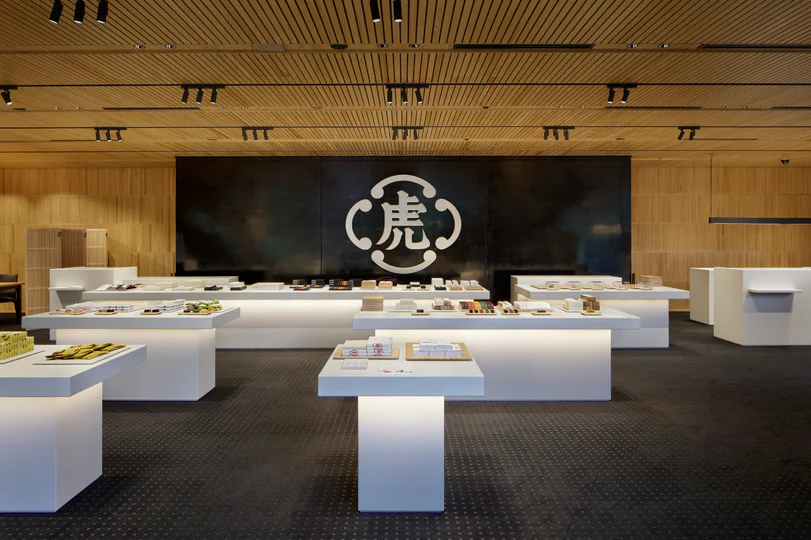
Toraya, the legendary Japanese confectionery, has been making yokan for over five centuries. Yet it continuously updates its packaging, retail spaces, and flavor expressions. The product evolves; the philosophy does not. This is what designing for the century looks like in practice.
For modern brands, the lesson is clear: permanence does not mean rigidity. It means having a core so clear that everything else can change around it without losing identity.
Brands That Arrive Too Early and Brands That Arrive Too Late
If time is a design material, then timing is a design skill. And the most common failure is not being too slow — it is being too fast.
Google Glass was a technological marvel. But it arrived in 2013, before the cultural infrastructure existed to accept it. Wearable computing was not yet normalized. Privacy concerns around face-mounted cameras were unresolved. The product was brilliant; the timing was catastrophic. Google Glass became a symbol not of innovation, but of tech-industry hubris.
Compare this with iPhone’s debut in 2007. Smartphones existed before the iPhone. Touchscreens existed. Mobile internet existed. But Apple waited until all the pieces — technology, infrastructure, cultural readiness — aligned. The iPhone didn’t invent the category. It arrived at the exact moment the world was ready to embrace it.
The difference is what we might call being “half a step ahead.” Not so far ahead that the market cannot comprehend you. Not so aligned with the present that you offer nothing new. Half a step — enough to lead, close enough to be followed.
For brand builders, this means resisting the pressure to be first. Being first is a speed metric. Being timely is a design metric. They are fundamentally different disciplines.
Maturation in the Digital Age — When Waiting Becomes Strategy
In the digital age, everything accelerates. Production, distribution, feedback loops — all compressed to near-instantaneity. In this environment, the idea of deliberately slowing down sounds almost heretical.
Yet some of the most powerful brand strategies are built on the principle of delay.
The Hermès Birkin bag requires a waiting period that can stretch to years. This is not a supply chain failure — it is a deliberate design of temporal white space. The wait itself becomes part of the brand experience. Anticipation generates desire. Delay creates meaning. The time between wanting and having is where the brand’s mystique lives.
This principle extends beyond luxury. When a craft brewery limits production not because it cannot scale but because it chooses not to, it is making a temporal design choice. When a software company releases updates on a deliberately measured cadence rather than pushing features as fast as possible, it is designing with time.
In an age of instant gratification, the brands that make you wait — and make the wait worthwhile — occupy a fundamentally different position in the mind. They are not competing on speed. They are competing on depth. And depth, by definition, requires time.
The Blueprint for a 100-Year Brand
Throughout this series, we have explored seven principles for building brands that endure: contour, white space, stance, complicity, ritual, contradiction, and now time.
These seven are not independent variables. They form an integrated system. Contour gives the brand a recognizable shape. White space gives it room to breathe. Stance gives it a reason to exist. Complicity gives it a community. Ritual embeds it in daily life. Contradiction gives it humanity. And time — time is the medium in which all the others mature.
A brand with strong contour but no patience will be striking but ephemeral. A brand with deep ritual but no stance will be habitual but meaningless. Only when all seven principles work together, compounding over time, does a brand achieve what the great shinise have achieved: the quiet, unshakeable authority of something that has simply endured.
The question for every brand builder is not “how do we grow faster?” It is “what are we building that will still matter in 100 years?” That question changes everything — the decisions you make, the compromises you refuse, the patience you cultivate.
In 2026, when the world demands speed, choose time. Make it your ally. Because in the end, the brands that last are not the ones that moved fastest. They are the ones that knew what was worth waiting for.