At a trade show or an event, we tend to reach for “a new ad surface.” A new panel, a new booth, new video. But one Canadian tourism board delivered big results without posting a single ad. It “wrapped” a place where customers were already gathering, whole, in its own world. Let’s break down a “template” that works especially for businesses with a physical site.
What happened
From June 11 to July 19, 2026, the tourism board of British Columbia, Canada (Destination BC), teamed up with the agency Zulu Alpha Kilo (a collaboration across its Vancouver, Toronto, and NY offices) to run an experience called “Home Pitch” at the FIFA Fan Festival Vancouver.
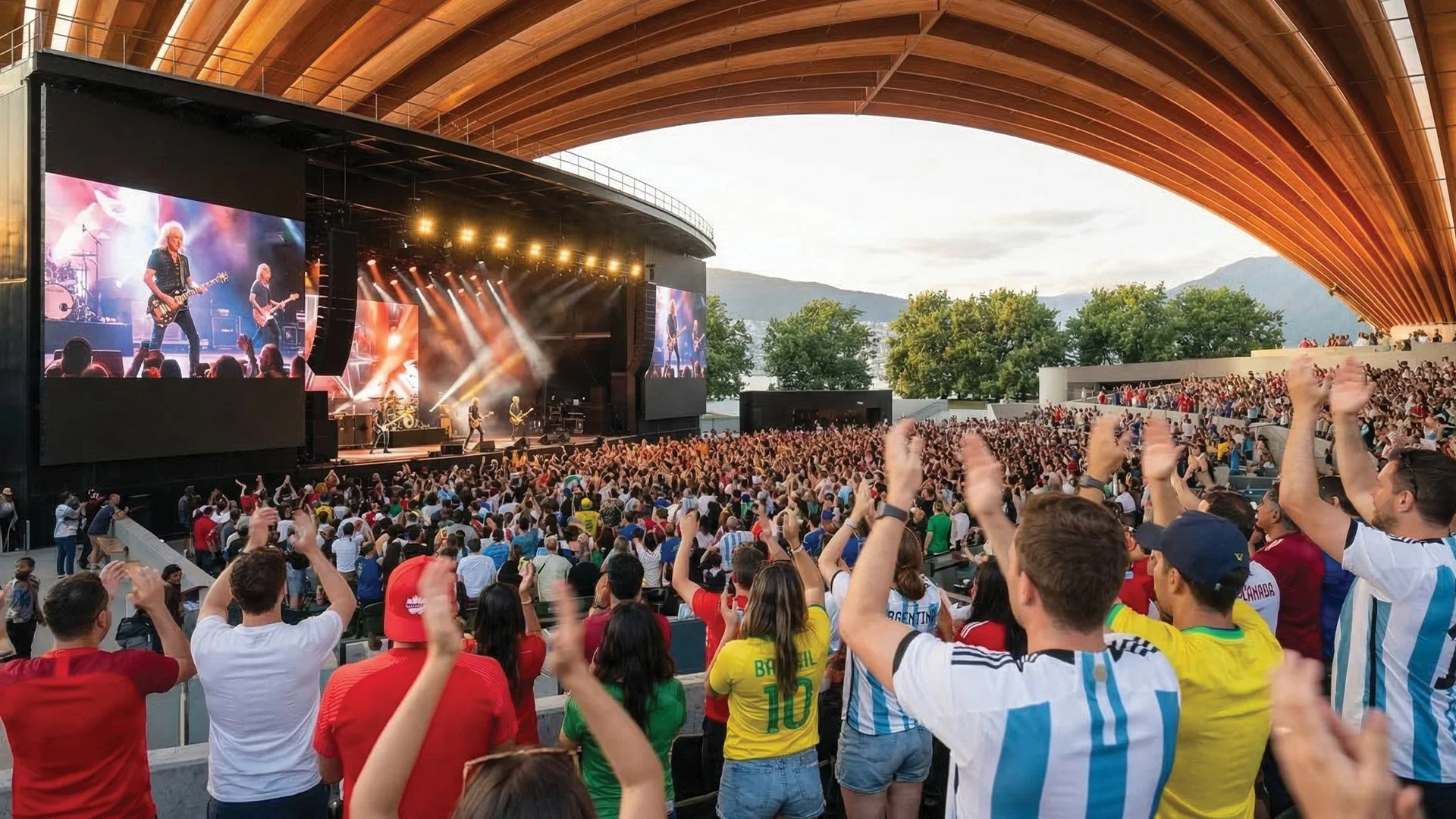
It surrounded an ordinary soccer pitch with about 12,000 square feet (roughly 1,100 m²) of 360-degree LED screens and spatial audio. Behind fans kicking a ball around, footage of the province’s landmarks and routes changed one after another. It was an “environment you could step inside and play in,” where sport, story, and place became one. The aim was to keep the heat of World Cup fans from ending in the host city of Vancouver alone, and connect it to touring the whole province. As of July 5, about 40,000 people had visited (over 10,000 in the opening weekend alone).
Why it worked
The trick lies in one point: rather than making a new ad that “shows” footage of tourist spots, it wrapped the full 360 degrees around an act customers already wanted to do (kick a ball) in its own worldview.
Being passively shown footage and immersing yourself in stunning scenery while playing leave completely different marks on memory. People doubt “an ad they were shown,” but they don’t doubt “the scenery in the middle of an experience.” What’s more, the stage was a place where fans had gathered on their own and were absorbed. So without any new customer acquisition, a huge volume of contact arose naturally. Rather than adding ad surfaces, it turned an existing “gathering of people” into the work itself—that is the ingenuity of the structure.
How a small business can use this
“We don’t have a budget for a 360-degree screen”—true. But strip it to the structure and scale doesn’t matter. Before making a new touchpoint, think about whether you can wrap the “surroundings” of a place where customers already stop, in your own world.
Take a trade show. Before printing new booth panels, wrap the surroundings of the place where visitors already stop—a demo area, in front of samples or the real product—with footage of your track record and your worldview. Don’t “show”; “stand them in the middle of the experience.” Or a store or workshop tour. Redesign the very flow customers always pass through as a continuous experience rather than explanatory panels. Rather than building a new ad space, turn the place people are already standing into one.
The common thread is: don’t create a new ad surface—turn the very place where customers already are into an ad experience. The place can be borrowed. The whole game is in “how you wrap it.”
In summary
What Home Pitch did was, instead of posting an ad, wrap a place where customers already gather in its own world. Dissolving yourself into existing heat is stronger than adding new touchpoints. This template is, if anything, easier to reproduce for small businesses that have a “place where people gather,” like a worksite or store.
At ASTER, we break down more than 100 talked-about ads to the structure of “why it worked,” and translate that into your industry. How could you turn a “place where people gather” that you already have into an experience? Shall we take stock together?
(We have explainer materials on these structures and a collection of past cases ready. Feel free to get in touch.)